
Care
Treatments
Use the links below to jump to a treatment. Call or email to ask about an assessment.
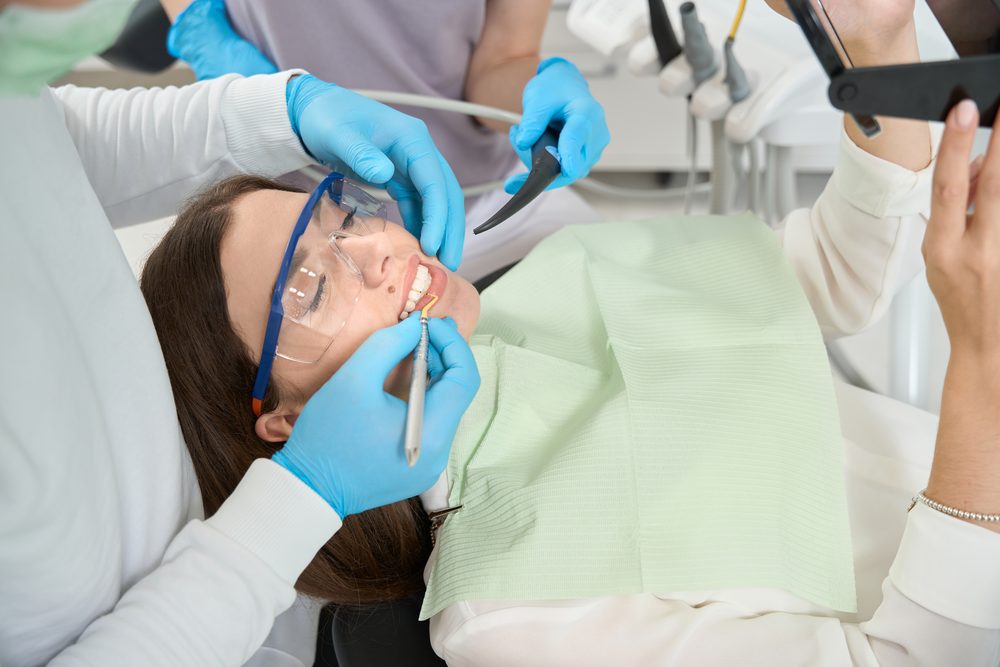
We keep dental care easy to understand. Each section below explains when a treatment might be considered, what is involved, and how NHS and private options differ. Your dentist will always explain what applies to you.
See full Price List for confirmed NHS band charges. Private fees are quoted after assessment.
- Bonding
- Bridges
- Crowns
- Dentures
- Fillings
- Hygiene
- Implants
- Invisalign
- Root canal
- Veneers
- White fillings
- Whitening
Conservative Reshaping With Tooth-Coloured Resin
Composite Bonding
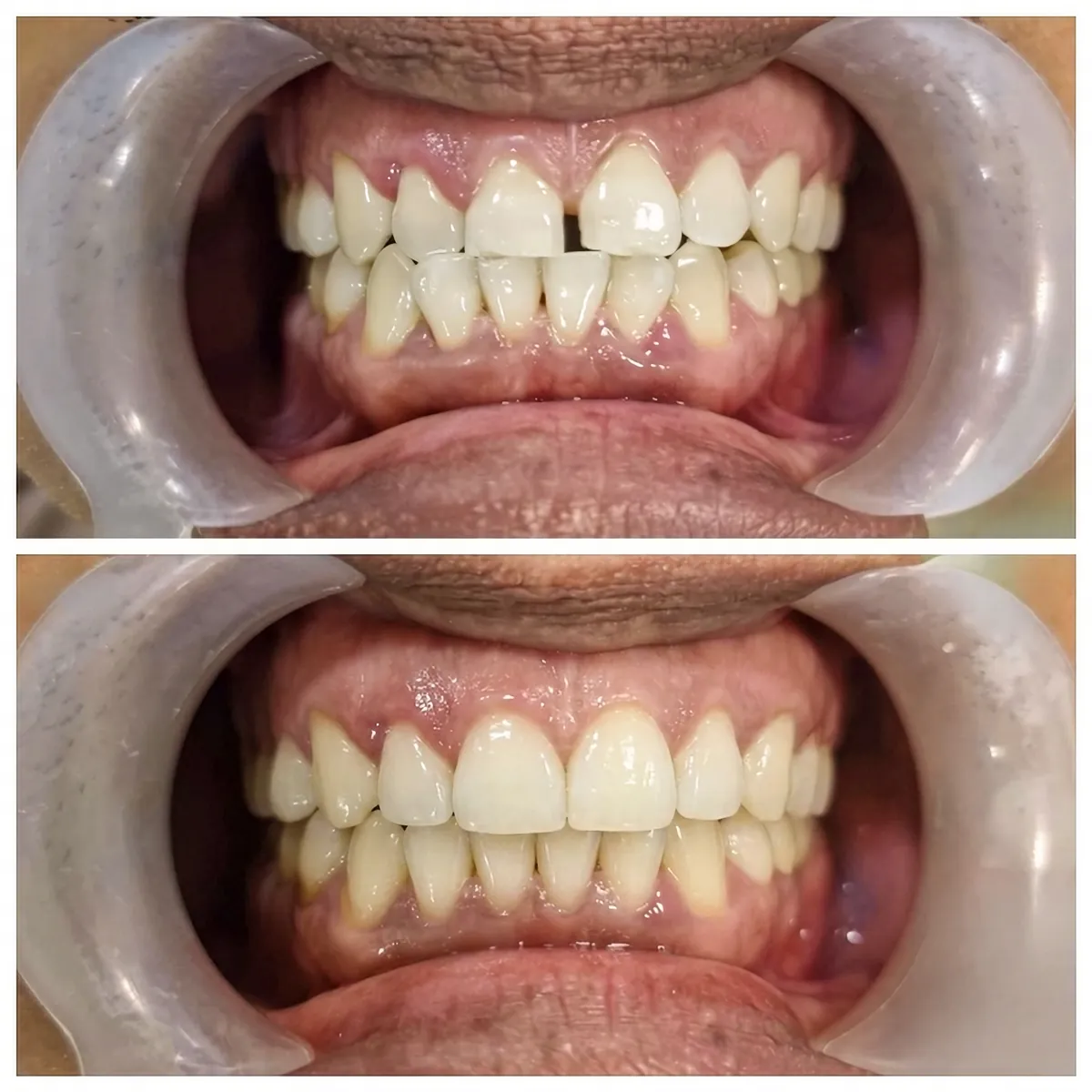
Composite bonding uses tooth-coloured resin to make carefully planned changes to tooth shape, edges or small spaces, often with minimal tooth preparation. Bonding can address selected cosmetic and restorative concerns. We begin by assessing your oral health and bite, then plan proportions that complement your natural teeth and agree realistic outcomes with you.
When might this treatment be considered?
- Small chips or worn edges need repair
- Minor gaps or shape differences are a concern
- A localised defect or discolouration can be masked
- A reversible or additive alternative to porcelain may be appropriate
What is involved?
- Consultation - we discuss your goals, examine the bite and check teeth and gums are healthy.
- Planning - photographs, a mock-up or digital planning may be used for multi-tooth changes.
- Preparation - little or no drilling may be required, though this depends on the case.
- Layering - composite shades are bonded, shaped and hardened directly on the tooth.
- Finishing - the bite, texture and polish are refined, followed by maintenance advice.
Benefits and limitations
Bonding is often completed directly and preserves natural tooth tissue. It can be repaired, but may chip, wear or stain more readily than porcelain and can require future polishing, repair or replacement.
NHS
If a tooth is chipped or damaged, a repair may be possible as an NHS white filling.
Private
Elective composite bonding is carried out mainly to change appearance. It is not available through the NHS and is provided privately.
- Greater appointment flexibility: with more choice over appointment times
- Longer appointments: allowing more time for complex cases
- A wider choice of materials: to provide the best aesthetics
Book an assessment 0191 323 8814
A Fixed Way to Replace Missing Teeth
Dental Bridges
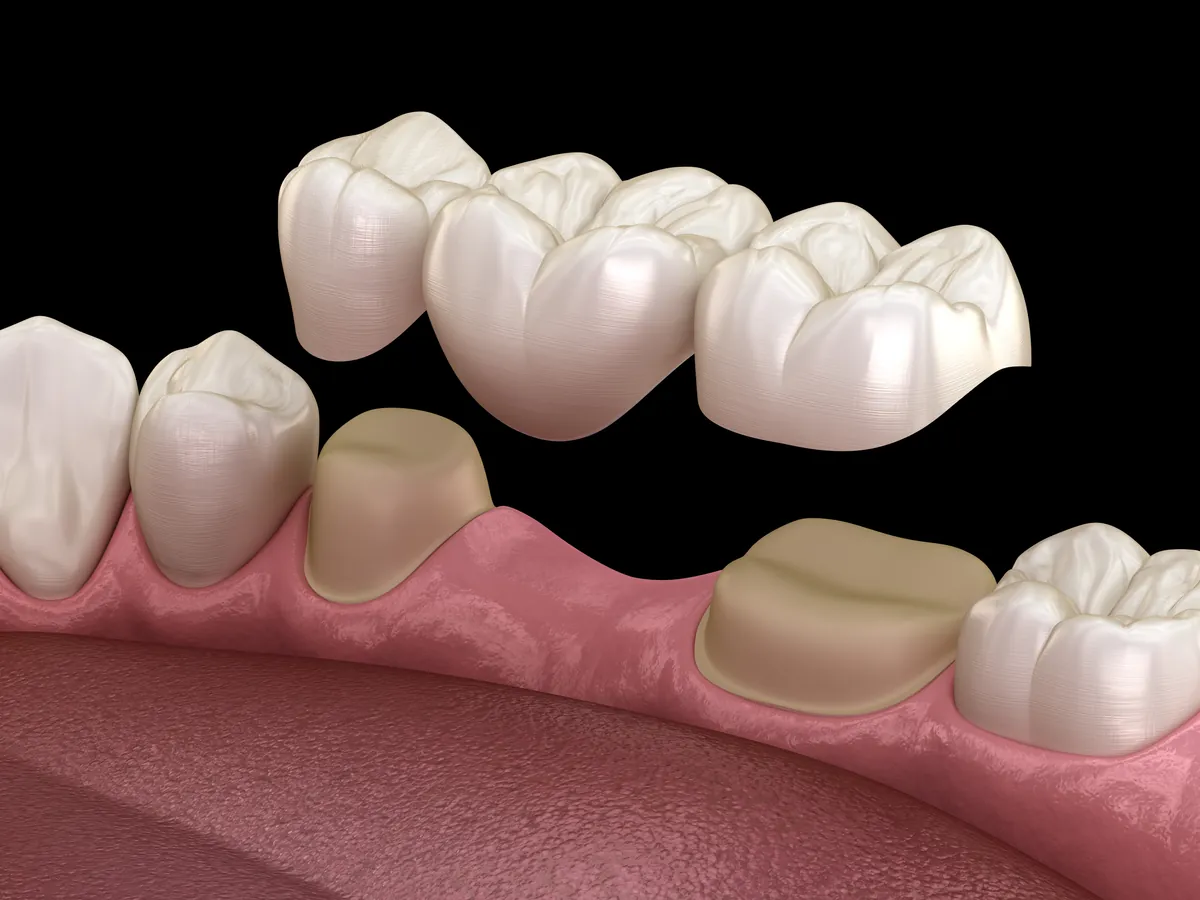
A dental bridge replaces one or more missing teeth with a fixed restoration supported by neighbouring teeth or dental implants. A gap can affect eating, speech and the position of nearby teeth. We assess your whole mouth and explain whether a bridge, denture, implant or leaving the space untreated is the most suitable option.
When might this treatment be considered?
- One or more teeth are missing
- A fixed option is preferred to a removable denture
- Implant treatment is unsuitable or not preferred
What is involved?
- Assessment - we assess the gap, supporting teeth, gums and bite, using X-rays where indicated.
- Planning - we compare conventional, adhesive and implant-supported designs where relevant.
- Preparation - supporting teeth may be shaped for a conventional bridge; adhesive bridges often require less preparation.
- Records - impressions and shade details are sent to a dental laboratory.
- Fit - the bridge is tried in, adjusted and fixed once fit, function and appearance are satisfactory.
Benefits
A bridge can restore chewing and appearance without a removable appliance. A conventional bridge requires preparation of neighbouring teeth, and every bridge needs careful cleaning around and beneath it.
NHS - Band 3
A bridge may be provided within NHS Band 3 when it is clinically necessary and considered the most appropriate option.
Private
Privately, you can choose from premium all-ceramic and porcelain materials for the most natural, tooth-like appearance, with precise shade and shape matching.
- Greater appointment flexibility: with more choice over appointment times
- Longer appointments: allowing more time for complex cases
- Advanced technology: using digital scans as opposed to impressions
- A wider choice of materials: to provide the best aesthetics
Book an assessment 0191 323 8814
Strength • Protection • Natural Appearance
Dental Crowns
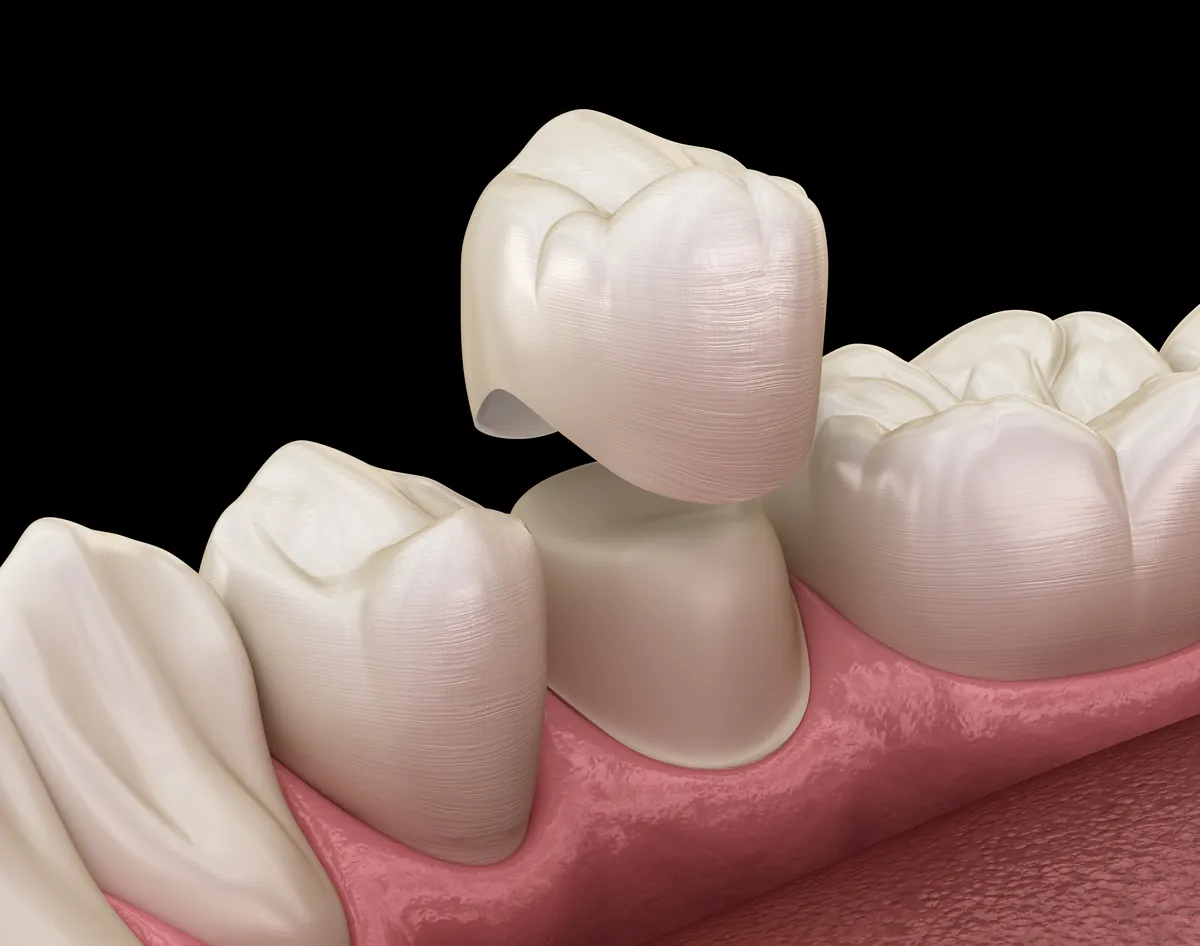
A crown is a custom made restoration that fits over a weakened or heavily restored tooth to rebuild its shape, function and appearance. A crown may be recommended when a filling would not provide enough protection. We plan each crown around your bite, oral health and preferences, and explain the suitable material options before treatment.
When might this treatment be considered?
- A tooth is cracked, broken or extensively filled
- Decay has left too little sound tooth for a direct filling
- A root-treated tooth needs additional protection
- A worn or misshapen tooth requires functional restoration
What is involved?
- Assessment - we check the tooth, gums and bite, using X-rays where indicated.
- Preparation - under local anaesthetic where required, the tooth is carefully shaped and any decay or defective restoration is removed.
- Records - impressions and shade information are taken for the dental laboratory.
- Temporary crown - a temporary restoration usually protects the tooth while the final crown is made.
- Fit - the final crown is checked for appearance, margins and bite before it is securely cemented or bonded.
Benefits and limitations
A well-planned crown can protect a vulnerable tooth, restore comfortable chewing and provide a natural-looking result. Crowns do not last indefinitely, so careful cleaning and regular reviews remain important.
NHS - Band 3
When clinically necessary, crowns are generally included in NHS Band 3. NHS crowns are made from a clinically suitable material (porcelain fused to metal for anterior teeth, metal for posterior teeth) chosen for durability, which may be less closely matched in colour and translucency to your natural teeth.
Private
Privately, you can choose from premium all-ceramic and porcelain materials for the most natural, tooth-like appearance, with precise shade and shape matching.
- Greater appointment flexibility: with more choice over appointment times
- Longer appointments: allowing more time for complex cases
- Advanced technology: using digital scans as opposed to impressions
- A wider choice of materials: to provide the best aesthetics
Book an assessment 0191 323 8814
Comfortable, Removable Tooth Replacement
Dentures
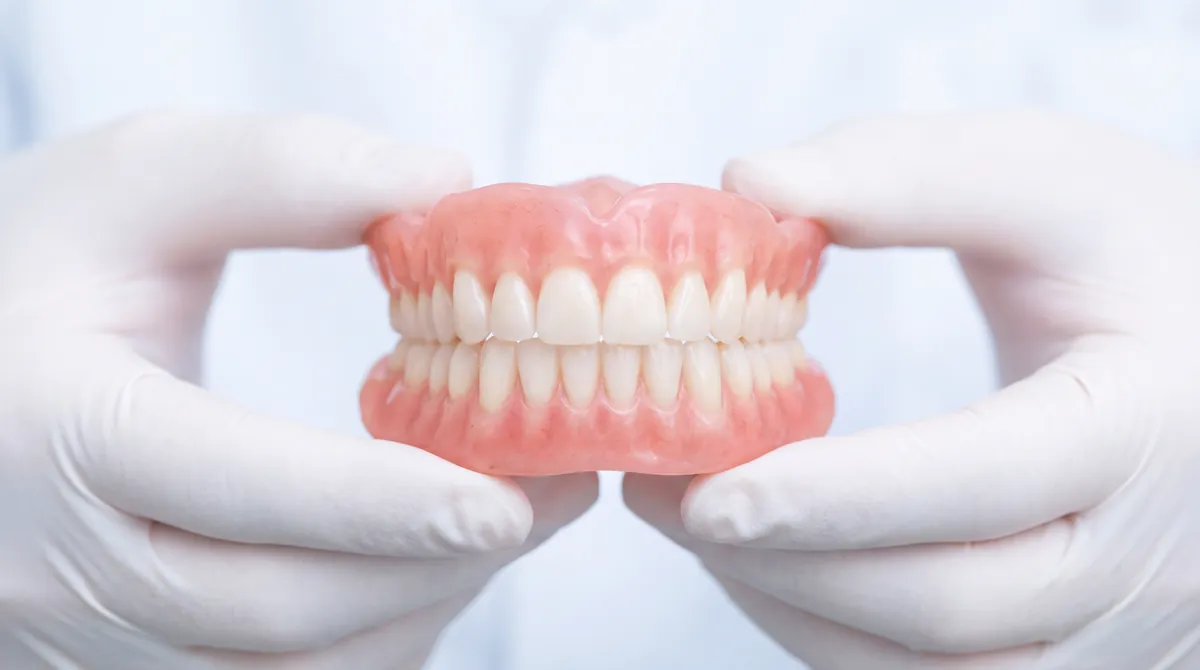
Dentures are removable appliances designed to replace some or all missing teeth and support eating, speaking and facial appearance. Every denture is planned individually. We consider your remaining teeth, gums, bite, appearance, dexterity and expectations, then explain suitable acrylic, metal-framework or implant-retained options.
When might this treatment be considered?
- Several or all teeth are missing
- A removable and comparatively non-invasive option is preferred
- A temporary replacement is needed after extractions
- Existing dentures are loose, worn, damaged or uncomfortable
What is involved?
- Assessment - we examine the mouth and discuss what you want the denture to achieve.
- Records - impressions, bite measurements and appearance details are collected over one or more visits.
- Try-in - where possible, a trial stage lets us review tooth position, bite and appearance.
- Fit - we insert the denture, check pressure areas and show you how to use and clean it.
- Review - adjustments are often needed as the mouth adapts, particularly after recent extractions.
Benefits and limitations
Dentures can replace several teeth without surgery and can often be adjusted or repaired. They will not feel exactly like natural teeth, and their stability depends on your anatomy, saliva and the health of the supporting tissues.
NHS - Band 3
Clinically necessary acrylic dentures are generally included in NHS Band 3.
Private
Privately, you can choose from a wider selection of materials for the most natural, tooth-like appearance, with precise shade and shape matching.
- Greater appointment flexibility: with more choice over appointment times
- Longer appointments: allowing more time for complex cases
- Advanced technology: using digital scans as opposed to impressions
- A wider choice of materials: to provide the best aesthetics
Book an assessment 0191 323 8814
Repairing Decayed or Damaged Teeth
Dental Fillings
 NHS
Private
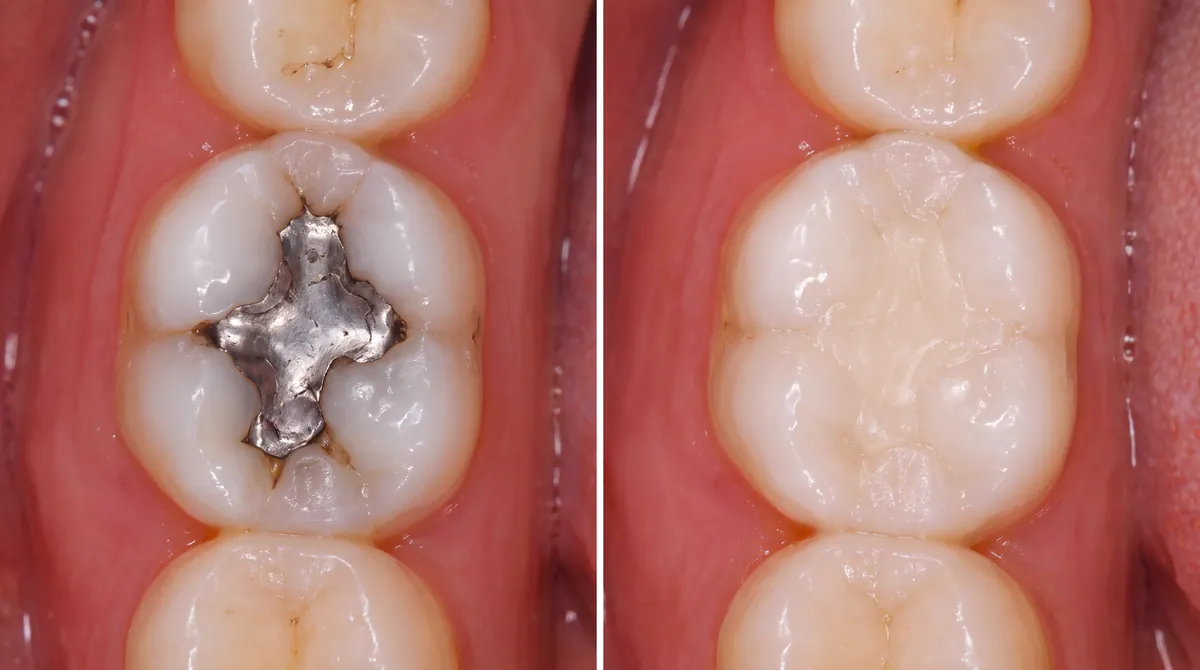
Fillings restore areas affected by decay, wear or fracture and help return a tooth to comfortable everyday function. We preserve healthy tooth tissue wherever possible. The most suitable filling material depends on the tooth, the size and location of the cavity, chewing forces, moisture control, appearance and whether treatment is provided privately or through the NHS.
When might this treatment be considered?
- Decay has created a cavity
- An existing filling is leaking, fractured or worn
- A tooth has chipped or developed localised wear
- Sensitivity is linked to an area that can be restored
What is involved?
- Diagnosis - the tooth is examined and X-rays may be taken where clinically indicated.
- Options - we explain the recommended material, alternatives, expected limitations and cost.
- Preparation - local anaesthetic may be used; decay and unsupported material are removed conservatively.
- Restoration - the filling is placed, shaped and set according to the chosen material.
- Finishing - the bite is checked and the surface is smoothed and polished.
Benefits and limitations
A filling restores the damaged area, protects the tooth and helps re-establish its shape and function. Fillings do not last indefinitely, and a very large defect may be better treated with an inlay, onlay or crown.
NHS - Band 2
Clinically necessary fillings are generally included in NHS Band 2. The material used is selected according to clinical need. Some aesthetic filling materials are not available on the NHS, and are a private option only.
Private
Privately, you can choose from premium aesthetic filling materials for the most natural, tooth-like appearance, with precise shade matching.
- Greater appointment flexibility: with more choice over appointment times
- Longer appointments: allowing more time for complex cases
- A wider choice of materials: to provide the best aesthetics
Book an assessment 0191 323 8814
Prevention • Gum Health • Stain Management
Dental Hygiene & Air Abrasion
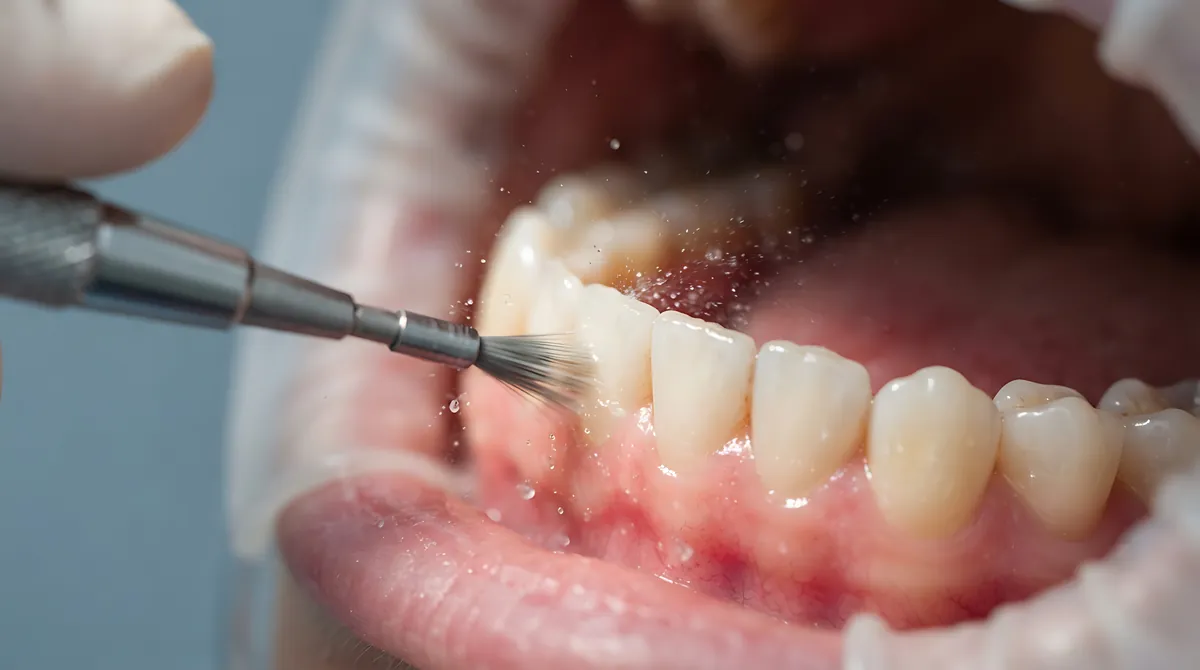
Hygiene care helps control plaque and calculus, supports gum health and provides practical guidance for keeping your mouth healthy at home. Appointments are tailored to your gum health. Where suitable, air polishing uses a controlled jet of air, water and fine powder to remove biofilm and some surface staining.
When might this treatment be considered?
- Gums bleed, feel tender or show signs of inflammation
- Calculus has built up where brushing cannot remove it
- Surface staining is affecting tooth appearance
- Extra support is needed with brushing, interdental cleaning or implant care
What is involved?
- Assessment - we review gum health, plaque levels, medical history and your current routine.
- Personal plan - we focus on the areas and risk factors most relevant to you.
- Professional cleaning - appropriate instruments are used to remove deposits above and below the gumline.
- Air polishing - where suitable, controlled powder and water can remove biofilm and some external stain.
- Coaching - you receive practical guidance on toothbrushes, interdental cleaning and prevention.
Benefits
Professional hygiene care can support gum health and make home cleaning more effective. Air polishing removes biofilm and some surface staining but, unlike whitening, does not change the natural colour of teeth.
NHS hygiene treatment
A scale and polish is included under NHS Band 1 (one visit) or Band 2 (two visits), where it's clinically needed as part of your check-up. What's included: removal of plaque and tartar build-up, and advice on brushing and flossing technique. Please note: NHS hygiene treatment is provided based on clinical need identified at your check-up, rather than as a routine, standalone service - this will only involve scaling the affected areas of your teeth. Removal of staining caused by lifestyle choices (e.g. smoking, tea/coffee/wine stains) is not an NHS service.
Private
Private hygiene care offers additional appointment time or techniques. Cosmetic stain removal, including air polishing provided solely to improve appearance, is private.
Book an assessment 0191 323 8814
Fixed Support for Replacement Teeth
Dental Implants
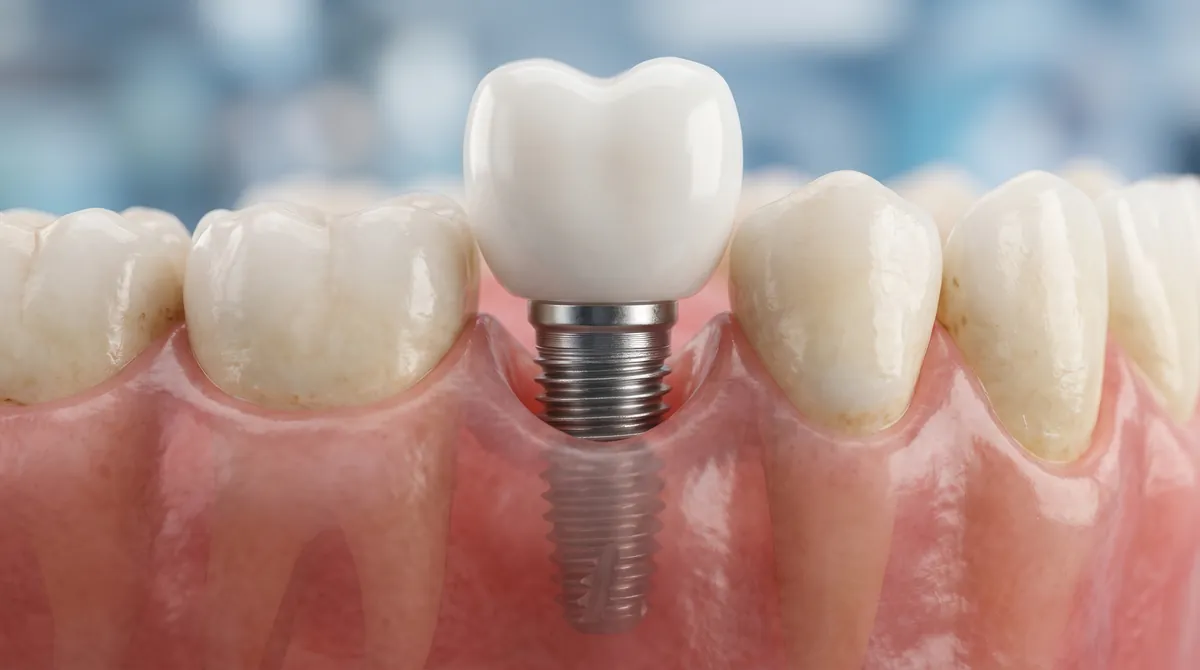
A dental implant is a small titanium fixture placed in the jawbone to support a crown, bridge or denture after careful assessment and planning. Implant treatment takes place in stages. Planning considers your general and oral health, available bone, bite, appearance, smoking, medicines and ability to maintain the result.
When might this treatment be considered?
- A single tooth, several teeth or all teeth are missing
- A fixed alternative to a removable denture is preferred
- A denture needs additional stability
- There is adequate bone, or suitable augmentation is possible
What is involved?
- Consultation - we discuss goals, alternatives, health and expected maintenance.
- Diagnostics - photographs, scans and usually three-dimensional imaging are considered where clinically justified.
- Preparation - gum disease, decay or other problems are treated first; grafting may occasionally be recommended.
- Placement and healing - the implant is placed using local anaesthetic and allowed time to integrate with the bone.
- Restoration - a custom crown, bridge or denture is fitted, followed by long-term reviews.
Benefits and limitations
Implants can support replacement teeth without preparing neighbouring teeth and may improve denture stability. Treatment involves surgical and restorative risks and cannot be guaranteed; careful assessment and long-term maintenance are essential.
NHS
Implants are not available on the NHS.
Private
A personalised private quotation will clearly separate the costs of assessment, imaging, implant placement, any bone grafting, temporary teeth, the final restoration and ongoing maintenance, where applicable.
Book an assessment 0191 323 8814
Discreet, Digitally Planned Teeth Straightening
Invisalign®
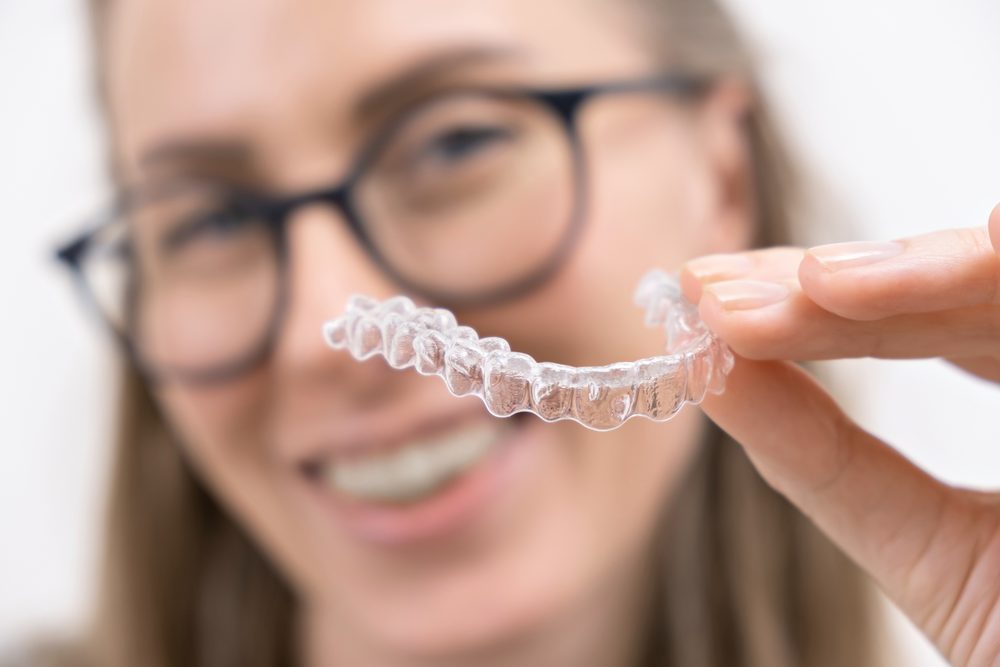
Invisalign® treatment uses a planned series of removable clear aligners to move teeth gradually under professional supervision. Clear aligners can treat many alignment and bite concerns, but they are not suitable for everyone. A clinical assessment checks your teeth, gums and bite and identifies any dental treatment needed before orthodontic care begins.
Invisalign® is only available privately, not as an NHS treatment. Fees are quoted after your consultation. See the Price List for how private fees work.
When might this treatment be considered?
- Crowding or spacing affects the position of teeth
- A discreet removable option is preferred
- The bite may benefit from orthodontic correction
- The patient can commit to consistent daily wear and reviews
What is involved?
- Consultation - we discuss your concerns, assess suitability and explain alternatives.
- Records - digital scans, photographs and any required X-rays support diagnosis and planning.
- Plan - your proposed tooth movements and realistic goals are reviewed before manufacture.
- Aligners - wear each set of aligners at all times for the prescribed period, only removing them for eating, drinking anything other than water, and cleaning.
- Retention - retainers are essential after active treatment to reduce unwanted tooth movement.
Benefits
Aligners are less noticeable than many fixed braces. Results depend on the complexity of treatment, biological response and consistent wear. Refinements or additional techniques may sometimes be required.
Book an assessment 0191 323 8814
Treatment is subject to clinical assessment and valid consent.
Relieve Pain • Save the Tooth
Root Canal Treatment
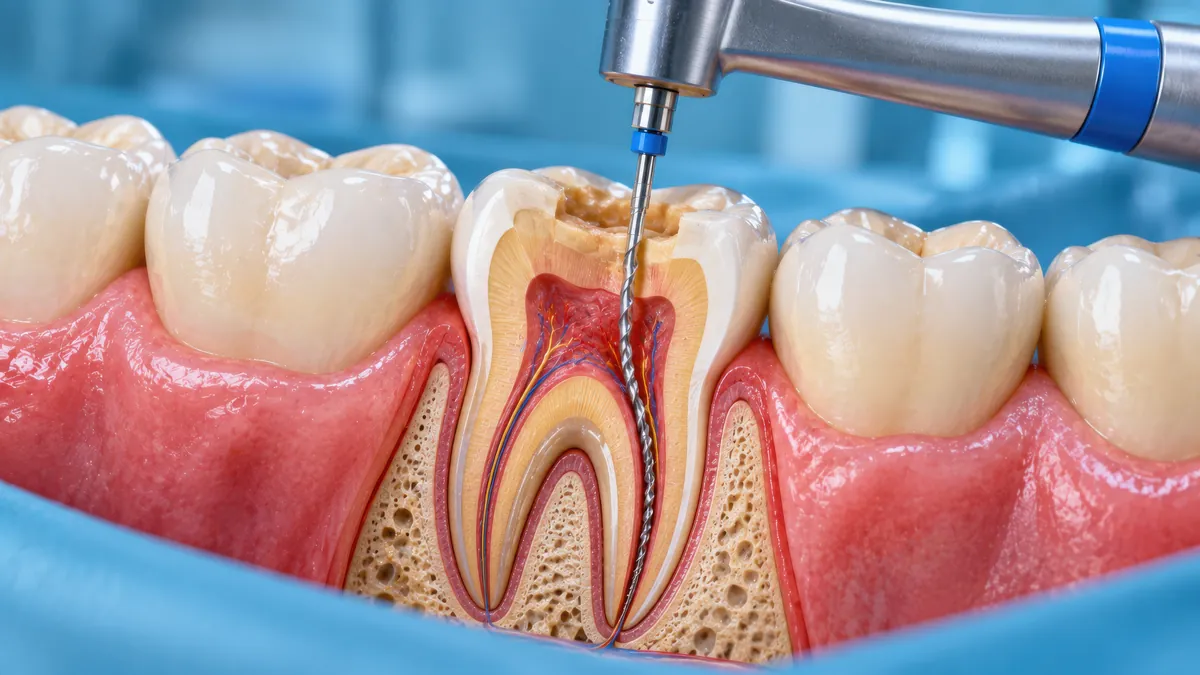
Root canal treatment can relieve dental pain and may save a tooth when the soft tissue inside it becomes inflamed or infected. At Denticentre, we provide careful root canal treatment with your comfort at the centre of every appointment. Treatment removes inflamed or infected tissue from inside the tooth, cleans and seals the root canals, and preserves as much of your natural tooth as possible.
When might this treatment be considered?
- Persistent toothache or pain when biting
- Sensitivity to hot or cold that does not settle quickly
- Swelling, tenderness or a recurring spot on the gum
- Deep decay, a crack or previous trauma affecting the tooth
What is involved?
- Assessment - we examine the tooth and take X-rays to assess its roots and the surrounding tissues.
- Comfort - we use local anaesthetic.
- Cleaning - the inflamed or infected tissue is removed and the root canals are carefully cleaned and shaped.
- Sealing - the canals are filled and the tooth is sealed with a temporary or permanent restoration.
- Protection - a crown may be recommended when a tooth needs extra strength, particularly a heavily restored back tooth.
Benefits
Root canal treatment can relieve symptoms, control infection and help avoid extraction. Success depends on the condition of the tooth, the extent of infection and whether the tooth can be restored effectively. Your dentist will explain the likely outcome and alternative options.
NHS - Band 2
When clinically necessary, root canal treatment is normally included in NHS Band 2. Availability depends on your individual treatment needs and the services available within your NHS course of care.
Private
We also offer root canal treatment privately for patients who would prefer greater flexibility or require treatment that is more complex than can be provided within their NHS care.
- Greater appointment flexibility: with more choice over appointment times
- Longer appointments: allowing more time for complex cases
- Advanced techniques and technology: where appropriate, including rotary endodontic instruments
- A wider choice of materials and restorative options
The cost of private root canal treatment depends on the tooth being treated and the complexity of the case. Front teeth, premolars and molars can have different numbers and configurations of root canals, so treatment costs can vary.
Book an assessment 0191 323 8814
Custom-Made Coverings for the Front of Teeth
Dental Veneers
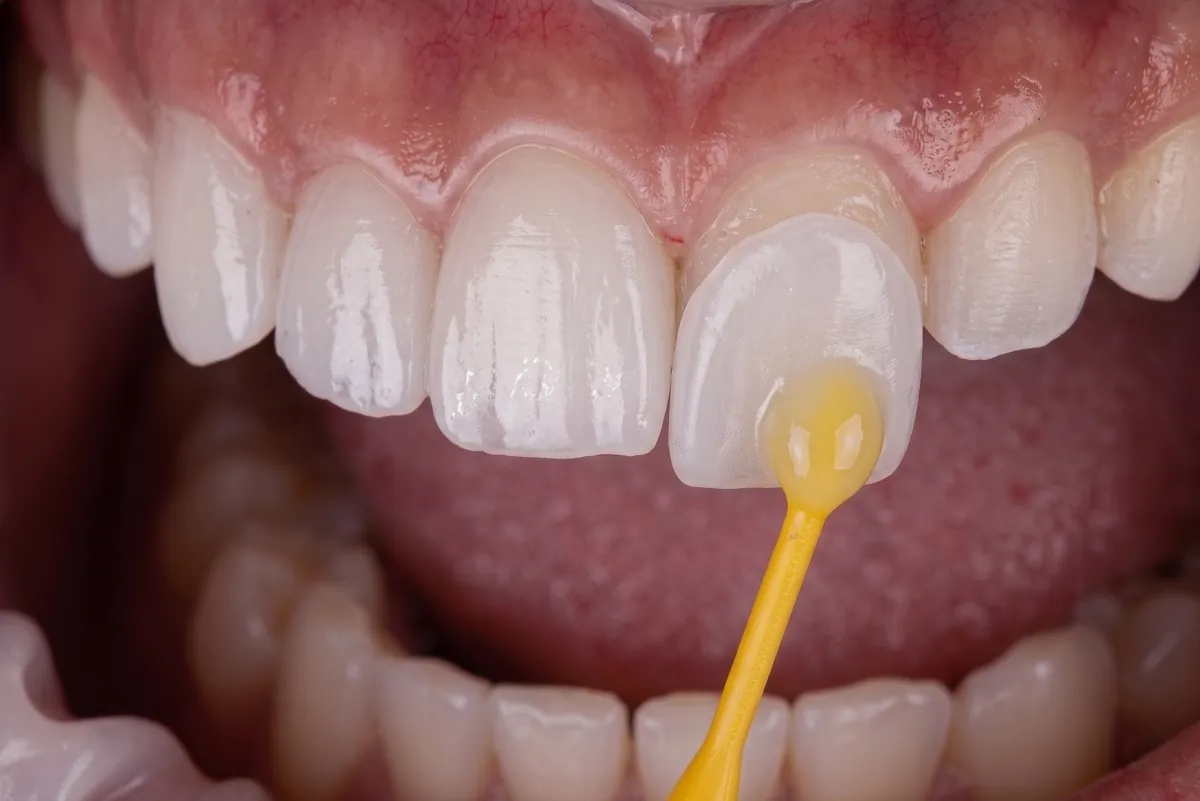
Veneers are thin restorations placed over the front surface of selected teeth to alter shape, colour or proportion after careful planning. Veneers may be made from ceramic or built directly with composite. In most cases they are elective. Alternatives such as whitening, orthodontics or bonding may preserve more natural tooth tissue.
When might this treatment be considered?
- Shape, size or proportion cannot be addressed predictably with simpler treatment
- A resistant discolouration is unsuitable for whitening alone
- A worn or damaged front surface needs restoration
- The patient understands maintenance and irreversible aspects of treatment
What is involved?
- Assessment - teeth, gums, bite and expectations are reviewed; disease must be controlled first.
- Design - photographs, scans, trial designs or mock-ups may help agree the proposed result.
- Preparation - ceramic veneers may require removal of some enamel; direct composite options may require less.
- Manufacture or placement - ceramic veneers are made by a laboratory, while composite is shaped directly.
- Bonding and review - fit, shade and bite are checked before final bonding and follow-up.
Benefits and limitations
Veneers can alter several aspects of a tooth's appearance using a thin restoration. Possible limitations include sensitivity, chipping, debonding, gum changes and the need for future replacement.
NHS - rarely provided (Band 3 if indicated)
Veneers are rarely provided through the NHS. In limited circumstances, a laboratory-made veneer may be clinically indicated within Band 3; this is determined by assessment rather than preference alone.
Private
Veneers are normally provided privately because treatment is usually cosmetic. We will explain suitable materials, alternatives, likely maintenance and costs before you decide.
- Greater appointment flexibility: with more choice over appointment times
- Longer appointments: allowing more time for complex cases
- A wider choice of materials: to provide the best aesthetics
Book an assessment 0191 323 8814
Tooth-Coloured Restorations
White Fillings
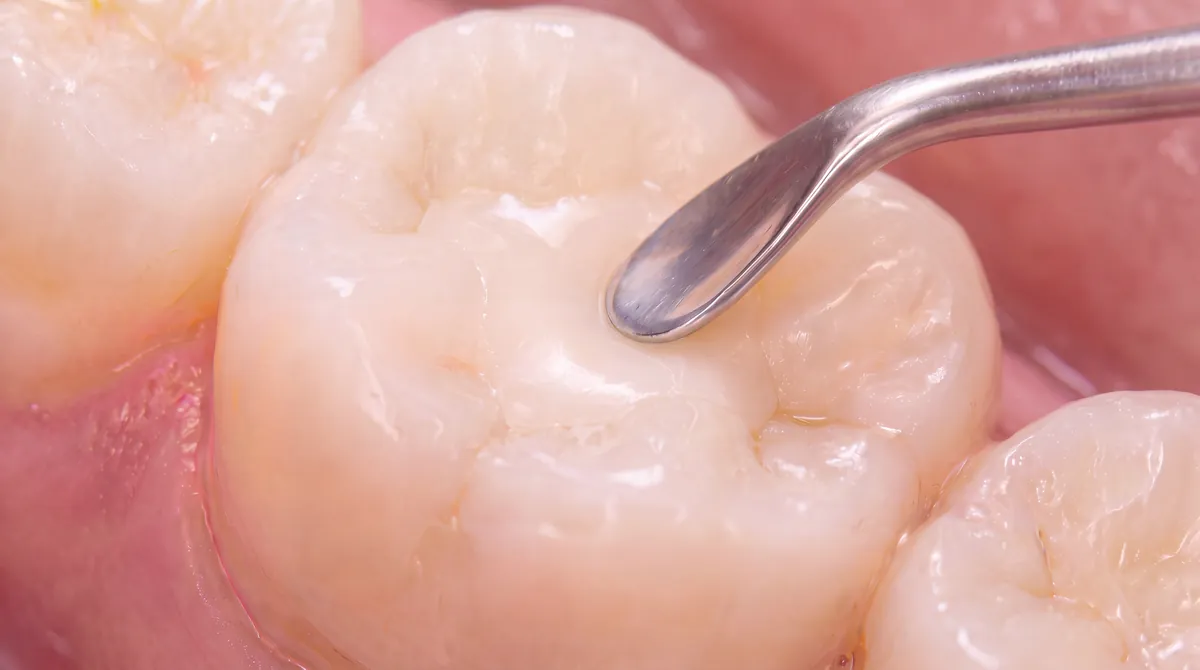
White fillings use tooth-coloured material to repair decay, chips or worn areas while blending with the surrounding tooth. Composite resin is bonded to the tooth and built up in layers. It can be a conservative and attractive option, although suitability depends on cavity size, position, bite and the ability to keep the area dry during placement.
When might this treatment be considered?
- A visible tooth needs a discreet restoration
- A small or moderate cavity requires repair
- An old filling needs replacement for clinical reasons
- A chipped or worn area can be restored directly
What is involved?
- Assessment - we confirm the cause and extent of damage and whether a direct filling is strong enough.
- Shade selection - a suitable tooth-coloured shade is chosen before the tooth dries.
- Preparation - decay or defective material is removed, normally with local anaesthetic where needed.
- Bonding - the tooth is conditioned and composite is added and hardened in controlled layers.
- Finishing - the shape, contact, bite and surface polish are checked.
Benefits and limitations
White fillings can blend with natural teeth and often require only conservative preparation. They can take longer to place than some alternatives and may stain, wear or fracture over time.
NHS - Band 2
Certain limited types of white filling materials may be available within NHS Band 2 when clinically necessary and only for the front teeth. For back teeth, the material offered is selected according to clinical need, durability and longevity.
Private
A wide selection of tooth-coloured materials and techniques are available where a particular aesthetic result is requested and clinically suitable.
- Greater appointment flexibility: with more choice over appointment times
- Longer appointments: allowing more time for complex cases
- A wider choice of materials: to provide the best aesthetics
Book an assessment 0191 323 8814
Dentist-Supervised Whitening
Teeth Whitening
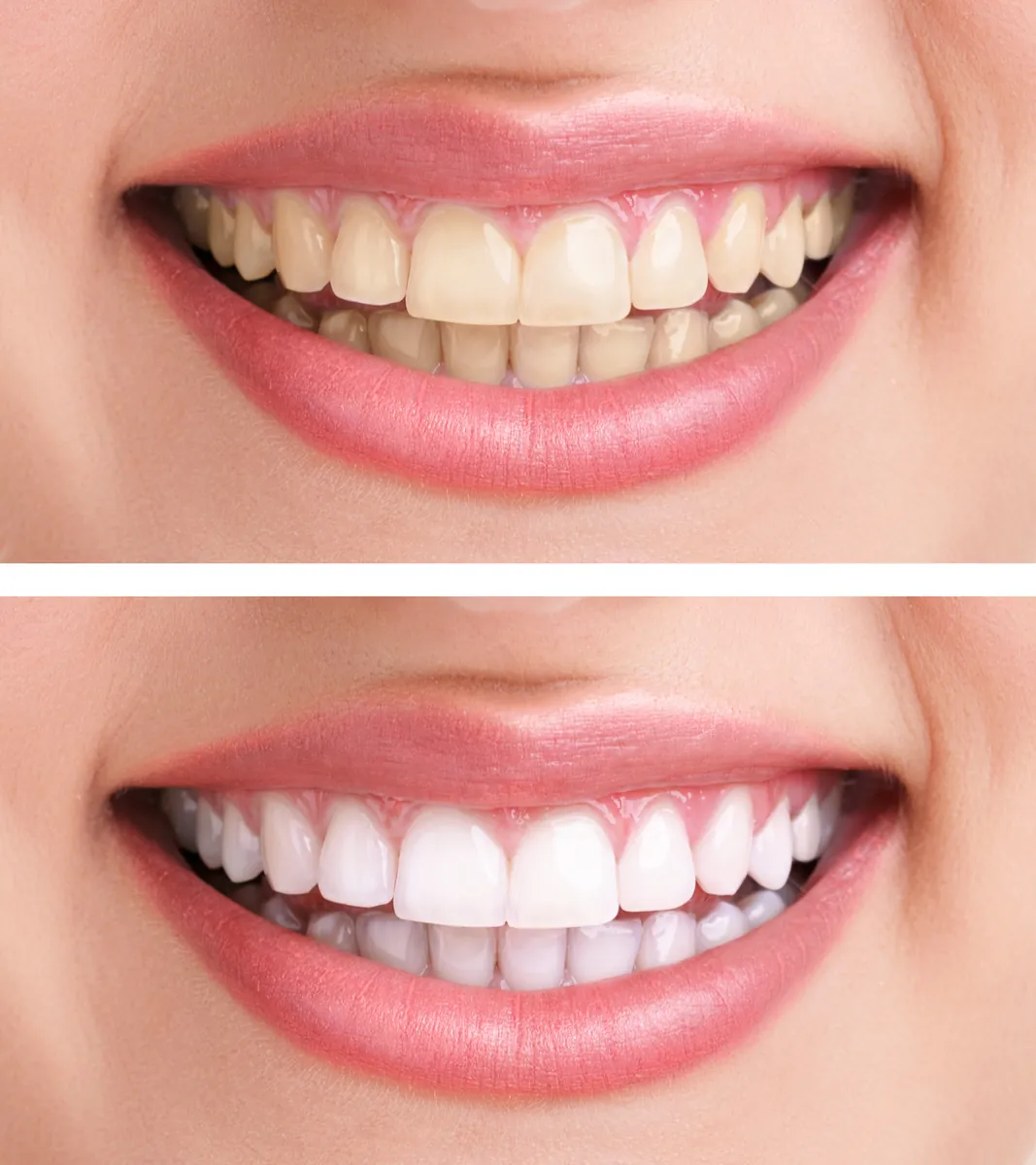
Teeth whitening lightens the colour of natural teeth using regulated products prescribed following a dental assessment. We first check that your teeth and gums are healthy and that whitening is suitable for your concern. Crowns, veneers, bridges and fillings will not change colour, so we consider their shade and position when planning treatment.
When might this treatment be considered?
- Natural teeth have darkened over time
- Food, drink or smoking has contributed to staining
- A brighter shade is desired before other planned cosmetic work
- The mouth is healthy and the patient is clinically suitable
What happens?
- Assessment - we identify the likely cause of discolouration and check for decay, cracks, sensitivity and gum problems.
- Planning - we explain realistic results, alternatives and the effect on existing restorations.
- Prescription - custom trays and whitening product are supplied for supervised home use.
- Review - progress, comfort and shade are checked where indicated.
- Maintenance - occasional top-up treatment may be appropriate, using only products and instructions supplied by a dental professional.
Benefits and limitations
Dentist-supervised whitening is tailored to you and includes checks for conditions that may need treatment first. Results vary, and a particular shade cannot be guaranteed.
NHS
Teeth whitening is cosmetic and is not an NHS treatment.
Private
Teeth whitening is cosmetic and provided privately. Products containing or releasing more than 0.1% and up to 6% hydrogen peroxide may generally be supplied only through a dentist to patients aged 18 or over, subject to professional-use requirements.
Book an assessment 0191 323 8814
For NHS banding detail see NHS Dentistry. For fees see the Price List. For clear aligners see Invisalign.
Treatment is subject to clinical assessment and valid consent.